This is not just a fruit.
It is a new expression of Japanese persimmon.
Rather than pursuing scale, we focus on expression. Each fruit is cultivated with care and harvested at a precise moment, just before surface cracking begins.
Rather than pursuing scale, we focus on expression. Each fruit is cultivated with care and harvested at a precise moment, just before surface cracking begins.
Bunalin is a small, young persimmon orchard in Hiroshima, Japan.
We focus on a single variety — Taishu — known for its crisp texture and refined sweetness.
Bunalin is a small, young persimmon orchard in Hiroshima, Japan.
We focus on a single variety — Taishu — known for its crisp texture and refined sweetness.
A quiet beginning.
It is a fruit that challenges expectations.
For those who have never enjoyed persimmons, or have been hesitant because of their softness, this is something else entirely.
It is a fruit that challenges expectations.
For those who have never enjoyed persimmons, or have been hesitant because of their softness, this is something else entirely.
What makes Taishu different is its texture. A crisp, clean bite that depends entirely on timing.
Traditionally, persimmons are eaten when fully ripened and softened. But Taishu can be harvested earlier — while still firm, even slightly green — and in doing so, reveals a completely different expression.
What makes Taishu different is its texture. A crisp, clean bite that depends entirely on timing.
Traditionally, persimmons are eaten when fully ripened and softened. But Taishu can be harvested earlier — while still firm, even slightly green — and in doing so, reveals a completely different expression.
I am drawn to Taishu at a very specific moment.
When young trees carry large fruits, there is a sense of imbalance — something
still developing, yet already full of presence. That tension is what interests me.
I am drawn to Taishu at a very specific moment.
When young trees carry large fruits, there is a sense of imbalance — something
still developing, yet already full of presence. That tension is what interests me.
Why Taishu
Among persimmons, Taishu is unique — combining a remarkable crisp texture with an unusually large size.
It is still not widely known, but often recognized quietly as one of the best by those who understand fruit.
Among persimmons, Taishu is unique — combining a remarkable crisp texture with an unusually large size.
It is still not widely known, but often recognized quietly as one of the best by those who understand fruit.
I choose to harvest early.
To preserve the crisp texture that defines it, and to maintain clarity and freshness for as long as possible.
I choose to harvest early.
To preserve the crisp texture that defines it, and to maintain clarity and freshness for as long as possible.
This approach also makes it suitable for longer journeys — including markets beyond Japan.
This approach also makes it suitable for longer journeys — including markets beyond Japan.
Bunalin Taishu is grown in Tamari, a small farming area surrounded by nature.
Developed locally and carefully cultivated, this persimmon is harvested before surface cracking, preserving its clean appearance and refined sweetness.
A quiet begining
Bunalin is a small, young persimmon orchard in Hiroshima, Japan.
We focus on a single variety — Taishu — known for its crisp texture and refined sweetness.
Rather than pursuing scale, we focus on expression. Each fruit is cultivated with care and harvested at a precise moment, just before surface cracking begins.
Why Taishu
I believe Taishu is ready to move beyond local assumptions and find its place in a wider world.
Among persimmons, Taishu is unique — combining a remarkable crisp texture with an unusually large size.
It is still not widely known, but often recognized quietly as one of the best by those who understand fruit.
I am drawn to Taishu at a very specific moment.
When young trees carry large fruits, there is a sense of imbalance — something
still developing, yet already full of presence. That tension is what interests me.
What makes Taishu different is its texture. A crisp, clean bite that depends entirely on timing.
Traditionally, persimmons are eaten when fully ripened and softened. But Taishu can be harvested earlier — while still firm, even slightly green — and in doing so, reveals a completely different expression.
It is a fruit that challenges expectations.
For those who have never enjoyed persimmons, or have been hesitant because of their softness, this is something else entirely.
I choose to harvest early.
To preserve the crisp texture that defines it, and to maintain clarity and freshness for as long as possible.
This approach also makes it suitable for longer journeys — including markets beyond Japan.
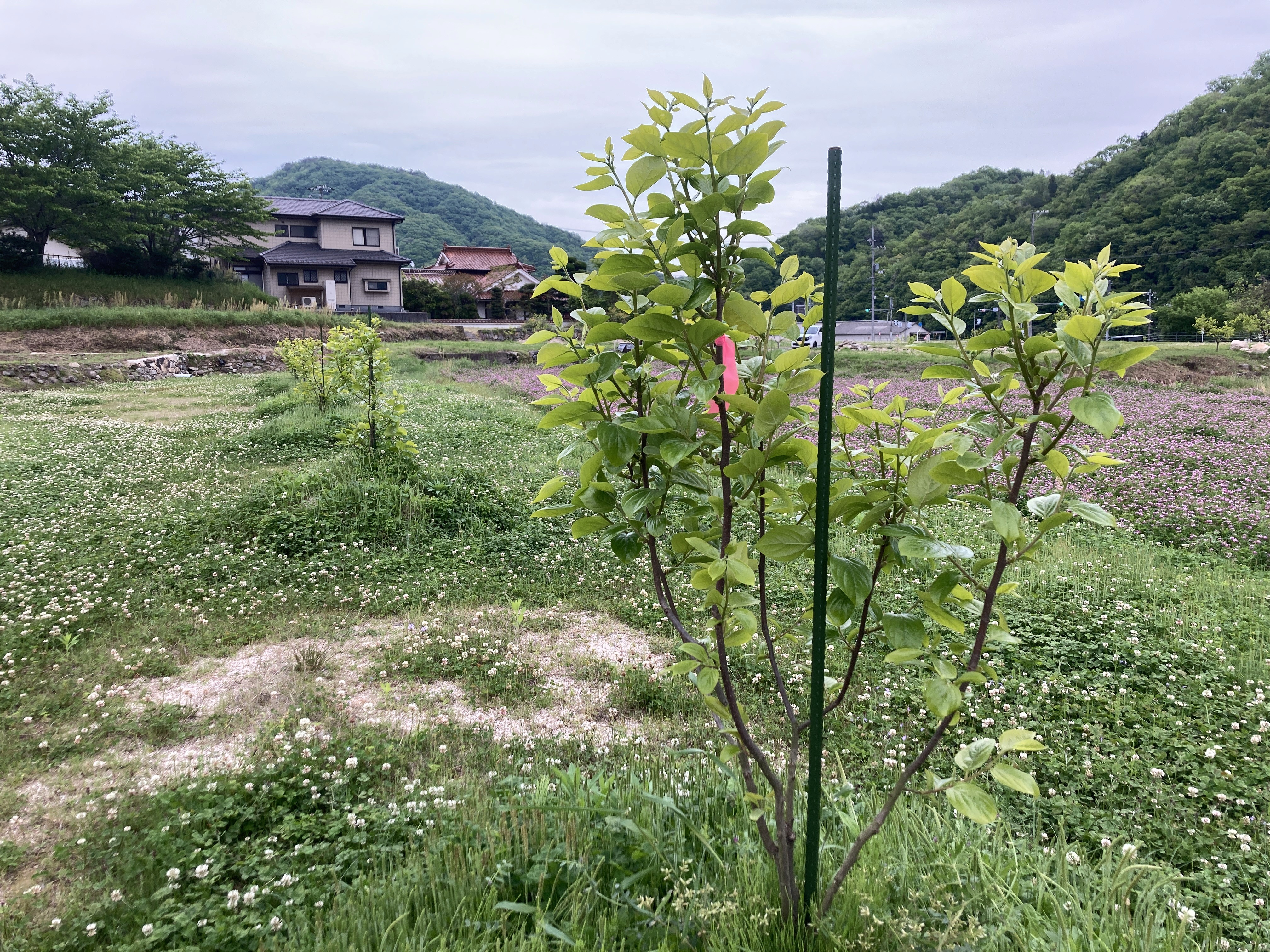
Our trees are still young.
Production is naturally limited, but this is part of the character.
Each fruit reflects this early stage — fresh, clear, and quietly evolving.
This is Taishu at its beginning.
We see this not as a limitation, but as the beginning of something worth sharing.
Born in quiet valley of Hiroshima
Born in quiet valley of Hiroshima
Bunalin Taishu is grown in Tamari, a small farming area surrounded by nature.
Developed locally and carefully cultivated, this persimmon is harvested before surface cracking, preserving its clean appearance and refined sweetness.
This is not just a fruit.
It is a new expression of Japanese persimmon.
I believe Taishu is ready to move beyond local assumptions and find its place in a wider world.
Our trees are still young.
Production is naturally limited, but this is part of the character.
Each fruit reflects this early stage — fresh, clear, and quietly evolving.
This is Taishu at its beginning.
We see this not as a limitation, but as the beginning of something worth sharing.
Our trees are still young.
Production is naturally limited, but this is part of the character.
Each fruit reflects this early stage — fresh, clear, and quietly evolving.
This is Taishu at its beginning.
We see this not as a limitation, but as the beginning of something worth sharing.